
Table of Contents
- Why Smart Home Is Now Relevant for LatAm Wholesale
- Which IoT and Smart Home Categories Are Moving in LatAm
- Regulatory Considerations: Connectivity Certification by Country
- The Brand Landscape for Smart Home in LatAm
- Sourcing Smart Home Products Through Authorized Channels
- Who Is Buying Smart Home Products Wholesale in LatAm
- Infrastructure Requirements That Affect Demand
- Frequently Asked Questions
1. Why Smart Home Is Now Relevant for LatAm Wholesale
Smart home and IoT devices have moved from a niche technology category to a mainstream consumer electronics segment in major LatAm markets over the past three years. The drivers are familiar: increasing smartphone penetration creates the management platform these devices require; broadband internet access has expanded significantly across urban and suburban areas; and device prices have dropped to accessible levels as Chinese manufacturers have scaled production.
For wholesale distributors, this transition creates an opportunity that does not yet have established supply chains at scale. The distributors who build smart home product relationships now — before the category is as mature as smartphones or audio — are positioned to be the preferred supply channel when demand accelerates further.
Smart home products also have a longer sales cycle than smartphones. A buyer who installs a smart lighting system tends to expand it over time, creating repeat purchase behavior that differs from the single-transaction smartphone model. For more on how to think about product mix as a distributor, read our guide on how to start a consumer electronics business in Latin America.
2. Which IoT and Smart Home Categories Are Moving in LatAm
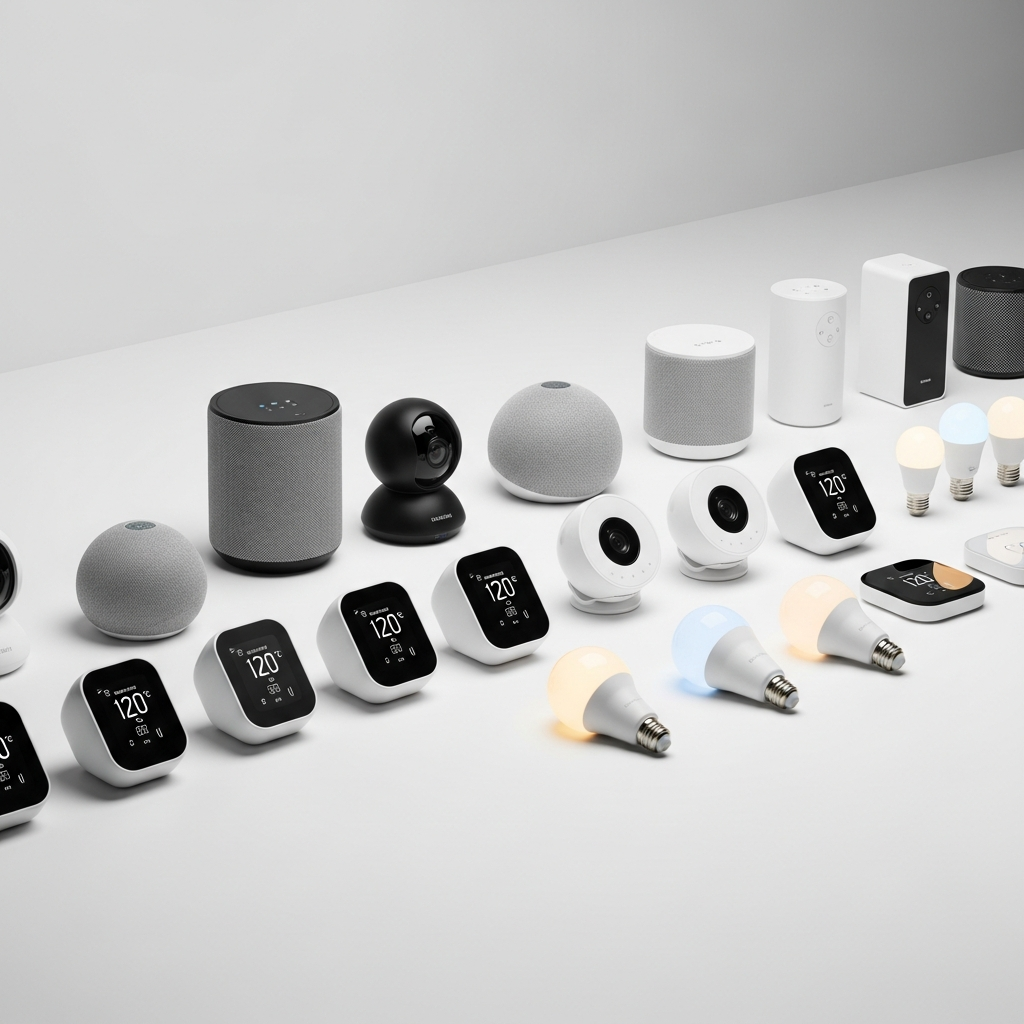
Smart speakers and voice assistants: Amazon Echo and Google Nest have meaningful market presence in urban LatAm. Xiaomi’s smart speakers at lower price points are gaining traction. Spanish-language voice assistant quality has improved significantly, removing a previous adoption barrier.
Smart lighting: LED smart bulbs (Philips Hue, Xiaomi, TP-Link Tapo) are the most accessible smart home entry point. Low price point, immediately useful, and compatible with both Amazon Alexa and Google Home ecosystems. Strong retail channel demand.
Security cameras and smart doorbells: High-growth category across all LatAm markets, driven by security concerns. Xiaomi, TP-Link, and Wyze are all gaining retail distribution. Both consumer and small business markets are active.
Smart plugs and power strips: High-volume, low-cost IoT accessories. Excellent for introducing buyers to smart home ecosystems. Fast-moving retail category, particularly when bundled with other smart home products.
Wi-Fi routers and mesh networking: Not traditional “smart home” but foundational infrastructure. Mesh networking systems (Linksys Velop, TP-Link Deco) have grown as home layouts require broader coverage. Both retail and installer channels are active.
Smart TVs and streaming devices: Chromecast, Amazon Fire Stick, and Roku are well-established. Smart TV demand drives the streaming device market in markets where TV penetration outpaces streaming device penetration.
3. Regulatory Considerations: Connectivity Certification by Country
Smart home and IoT devices communicate over radio frequencies (Wi-Fi, Bluetooth, Zigbee, Z-Wave) and therefore require radio frequency homologation in most LatAm markets. This is one of the most important considerations for wholesalers entering this category.
Mexico (IFT): The Instituto Federal de Telecomunicaciones requires homologation for all devices that transmit wirelessly. Products sold without IFT certification are subject to customs seizure and commercial penalties.
Colombia (MinTIC/CRC): Wireless devices require registration and certification through the Ministerio de Tecnologías de la Información. Requirements apply to commercial imports for resale.
Chile (SUBTEL): Subsecretaría de Telecomunicaciones certification is required for radio-frequency devices. Products with Bluetooth or Wi-Fi components require SUBTEL homologation before commercial sale.
Panama (ASEP): Autoridad Nacional de los Servicios Públicos requires type approval for wireless devices.
Products sourced through authorized Miami distributors for the LatAm market are typically accompanied by documentation confirming regional regulatory compliance. Products sourced outside authorized channels may lack this documentation — creating significant customs risk for the importer. For more on how authorization status affects your import risk, read our guide on the difference between authorized and grey market product.
4. The Brand Landscape for Smart Home in LatAm
Xiaomi / Mi: The most accessible smart home brand in LatAm. Xiaomi’s ecosystem spans speakers, cameras, lighting, and sensors at price points that are accessible across the LatAm middle market. High awareness, strong Mercado Libre presence.
TP-Link (Tapo / Kasa / Deco): Well-established networking brand with a growing smart home line. Tapo cameras and Kasa smart plugs have strong retail distribution. Deco mesh routers are the leading mesh networking product in the region.
Amazon (Echo / Fire): The dominant voice assistant platform in most LatAm markets. Echo devices drive Alexa ecosystem adoption, which in turn drives demand for compatible smart home products.
Linksys: Strong in networking infrastructure. Linksys Velop mesh systems are a consistent seller for home and small business buyers. Available through ATC’s authorized distribution catalog — browse the ATC brand catalog for details.
5. Sourcing Smart Home Products Through Authorized Channels
The authorized distribution logic that applies to smartphones and audio applies equally to smart home products. Products sourced outside authorized channels may lack regional regulatory certification, carry warranties not valid in the destination country, and create customs liability. For a detailed explanation of how authorized wholesale distribution works, read what it means to work with a B2B electronics wholesaler.
Smart home is also one of the categories where connectivity certification creates the most import risk. A batch of smart security cameras without the required IFT certification for Mexico or SUBTEL certification for Chile can be held at customs — creating financial exposure that far exceeds any sourcing cost savings. Your freight forwarder should know this risk; read our guide on how to find a reliable electronics freight forwarder for LatAm shipments for what to look for in a logistics partner for regulated product categories.
6. Who Is Buying Smart Home Products Wholesale in LatAm
Consumer electronics retailers: The primary channel. Smart home products now sit alongside smartphones and audio in most electronics retail environments in urban LatAm.
Home improvement and appliance stores: Smart lighting and smart plugs have crossed into the home improvement retail category. Hardware chains are increasingly stocking entry-level smart home products.
Security system installers: Professional installers who do home and business security are significant buyers of smart cameras and doorbells in volume. They value consistent product availability and technical support.
Telecom and internet service providers: Several LatAm telecoms bundle smart home devices with internet service plans — particularly smart speakers and routers. This creates B2B wholesale volume outside traditional retail.
7. Infrastructure Requirements That Affect Demand
Smart home adoption in LatAm is directly correlated with broadband internet penetration. Markets with higher fixed broadband and 4G/5G penetration show stronger smart home adoption. This creates geographic segmentation within each country: urban and suburban markets with reliable connectivity drive smart home demand; rural and lower-connectivity markets are not yet meaningful smart home buyers.
For wholesale planning purposes, this means targeting your smart home product inventory at urban retail channels in major cities and building in longer sell-through timelines for secondary market distribution.
Ready to get started? Visit our contact page, browse our full brand catalog, or explore our distribution solutions. You can also reach the sales team directly at (786) 235-7007.
Frequently Asked Questions
Do smart home products require different import documentation than standard electronics?
The commercial invoice, packing list, and bill of lading requirements are the same. What may be additional is the regulatory certification documentation required by the destination country’s telecommunications authority (IFT, MinTIC, SUBTEL, ASEP). This documentation should come from your supplier with the shipment. If it does not, customs may require it before releasing goods.
Are smart home products more expensive to ship than standard electronics?
Generally no, unless the product contains a large lithium battery component (some smart cameras and smart speakers have integrated batteries that trigger IATA lithium battery regulations for air freight). Standard smart plugs, lighting, and networking equipment ship under normal electronics handling without surcharges.
Which LatAm market is most developed for smart home wholesale right now?
Mexico and Chile have the most developed smart home retail ecosystems currently. Mexico’s large population and growing middle class drive volume; Chile’s higher per-capita income supports premium smart home products. Colombia is growing rapidly and is the most active emerging market for the category. Panama’s smaller market is relevant primarily for re-export through the Colón Free Zone.