
To import electronics from Miami to Mexico, you need a Mexican tax ID (RFC), registration in the importers’ registry, a licensed customs broker, and a pedimento (the Mexican customs declaration). Expect to pay 16% IVA on the customs value plus duties and fees, and make sure every product meets the NOM labeling rules that apply to electronics. With those pieces in place, Miami is one of the fastest sourcing lanes into Mexico.
The steps below follow the order a shipment actually moves, from paperwork in Mexico to the truck leaving a Miami warehouse.
Why import electronics from Miami to Mexico?
Miami gives Mexican buyers access to authorized US stock, consolidated orders across many brands, and short transit by road or air. The trade lane is large. Mexico imported US$26.97 billion of electrical and electronic equipment from the United States in 2025 [Source: Trading Economics, UN Comtrade 2025].
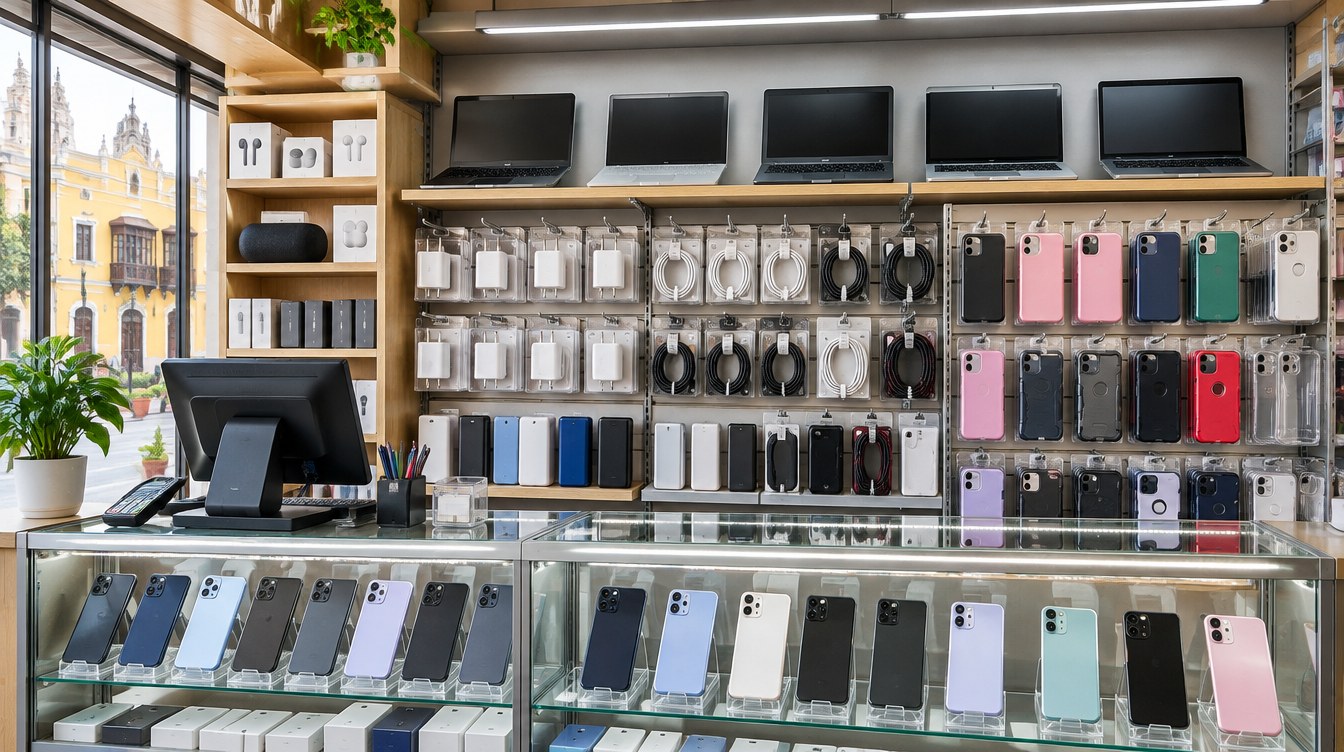
For resellers, the advantage is mix. One Miami order can combine phones, accessories, storage and audio, which cuts the number of pedimentos you file and the fees attached to each one. For a view of which categories are moving in the market, see our Mexico consumer electronics market guide.
What registrations do you need before importing into Mexico?
You need an RFC and an active listing in the Padrón de Importadores, the importers’ registry run by Mexico’s tax authority, SAT [Source: SAT 2026]. A foreign company can import through a Mexican subsidiary, through a registered legal representative, or through a Mexican buyer who acts as importer of record [Source: Camto 2026].
- RFC: the Mexican tax ID of the importer of record.
- Padrón de Importadores: must be active before goods arrive at the border.
- e.firma: the importer’s electronic signature, used to sign customs filings.
- Encargo conferido: the authorization that lets your broker act for you.
How does the customs broker and pedimento process work?
A licensed customs broker (agente aduanal) files the pedimento, calculates and pays duties for you, and clears the goods. A broker is mandatory for most commercial imports, and typical fees run about MXN 3,000 to 8,000 (roughly US$150 to US$400) per pedimento [Source: Camto 2026].
Ask for the broker’s patent number and confirm it before you ship. The broker also needs complete product data from your supplier: tariff classification, model numbers, quantities, values and country of origin. Missing data is the most common cause of delays at the border. A good freight forwarder for LatAm shipments will coordinate directly with your broker.
What taxes and fees apply when you import electronics from Miami to Mexico?
Plan for three charges: the import duty (IGI), the customs processing fee (DTA) and IVA. IVA is 16% of the customs value plus IGI plus DTA, and DTA is 0.8% of customs value [Source: Camto 2026].
| Charge | How it is calculated | Note |
|---|---|---|
| IGI (import duty) | Depends on tariff code and origin | Confirm per product with your broker |
| DTA | 0.8% of customs value | About US$8 per US$1,000 of goods |
| IVA | 16% of value + IGI + DTA | Paid up front, recoverable if VAT-registered |
| Broker fee | MXN 3,000 to 8,000 per pedimento | Varies by broker and complexity |
IGI is where buyers get surprised. Preferential USMCA treatment only applies to goods that meet North American rules of origin, and many consumer electronics are manufactured in Asia. Have your broker classify every SKU before you price it for resale. Our guide to wholesale payment terms explains how to plan cash flow around taxes that are paid before goods are sold.
Which documents does an electronics shipment to Mexico need?
Every shipment needs a commercial invoice, a packing list, the transport document and any origin or compliance proof your goods require. Electronics also face product rules: NOM-001-SCFI covers electrical safety and NOM-019-SCFI covers labeling [Source: Camto 2026].
- Commercial invoice with full product descriptions, model numbers and values.
- Packing list that matches the invoice line by line.
- Bill of lading or air waybill.
- Certificate of origin, only if you claim USMCA preference.
- NOM compliance proof and Spanish labeling, applied before crossing or at a labeling warehouse.
A new electronic value declaration (MVE) is also being phased in. It must be signed by the importer with an e.firma, and it becomes mandatory for definitive imports on January 15, 2027 [Source: Camto 2026].
Road or air: which shipping option fits your order?
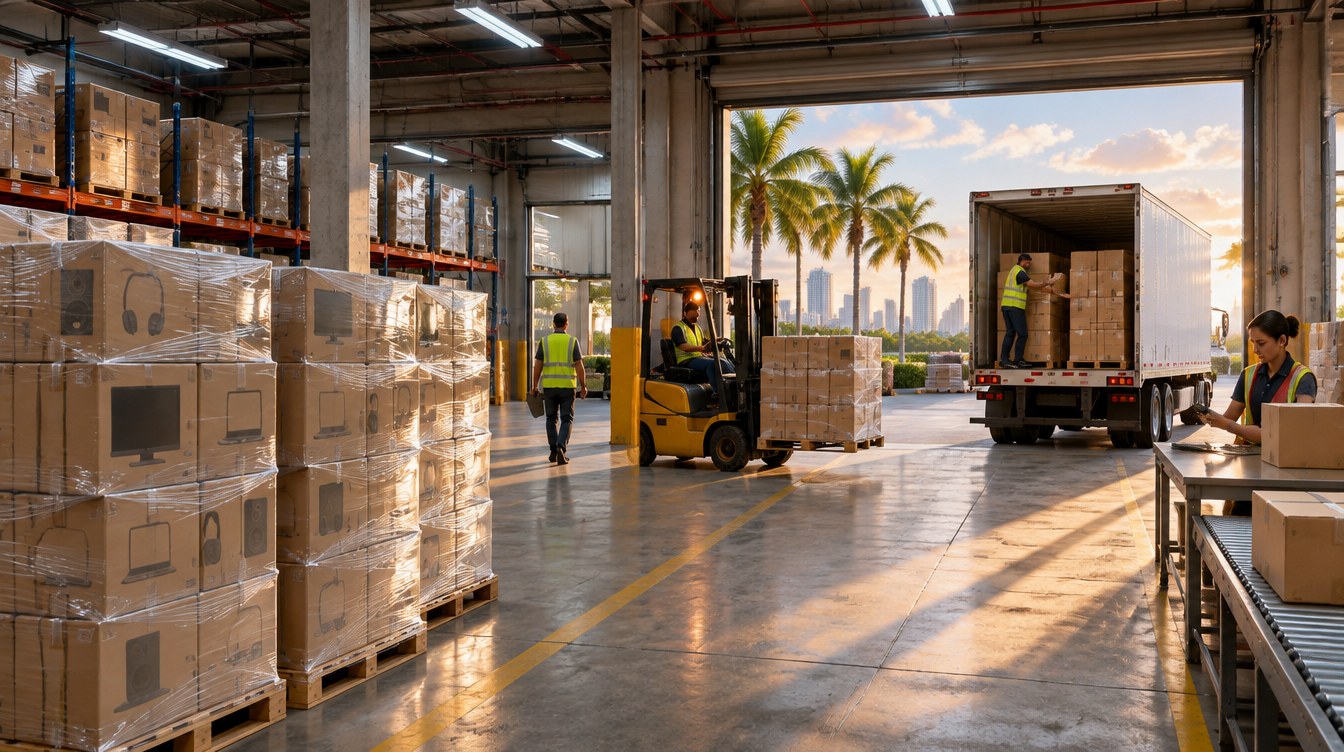
Road freight through Texas border crossings is the default for palletized volume, while air suits high-value, urgent or small orders. The right choice depends on value density and how fast you need stock on shelves. With US$26.97 billion of electrical and electronic goods crossing from the US to Mexico in 2025, both lanes are well served [Source: Trading Economics, UN Comtrade 2025].
| Mode | Best for | Watch for |
|---|---|---|
| Road (FTL or LTL) | Pallets, mixed categories, lower cost per kg | Border inspection time, cargo security |
| Air | Phones, small high-value lots, launches | Higher cost, battery shipping rules |
Agree on who controls each leg before you order. Our guide to Incoterms for electronics importers explains how EXW, FOB and CIF divide cost and risk.
Common mistakes when importing electronics into Mexico
Most delays come from paperwork, not freight. The importer’s registry must be active before goods arrive, and a suspended Padrón listing stops clearance until it is restored [Source: SAT 2026].
- Vague invoice descriptions. “Accessories” or “electronics” is not enough. List brand, model and function for every line.
- Invoice and packing list mismatch. Quantities that do not match trigger inspection.
- Missing Spanish labels. Products without compliant labeling can be held until they are relabeled.
- Assuming USMCA applies. Pricing a product at zero duty when it does not qualify wipes out margin.
- Underestimating IVA cash flow. The 16% is paid at the border, weeks before the stock sells.
Buying from an authorized source also reduces risk at customs, because documentation and product data are consistent. Our guide on authorized distributors vs the gray market explains why.
How Abboud Trading supports buyers in Mexico
Abboud Trading has served resellers across the Americas from Miami since 1996, with an office in Mexico and authorized supply from brands such as Samsung, JBL and Kingston. We prepare export-ready documentation, consolidate multi-brand orders and coordinate with your forwarder and broker. Learn more on our electronics distributor Mexico page or explore our distribution solutions. If you also ship to other markets, see our guides for Colombia and Chile.
Frequently asked questions
Can a US company import electronics into Mexico without a Mexican entity?
Not directly in most cases. The importer of record needs an RFC and an active Padrón de Importadores listing. A US seller can work through a Mexican subsidiary, a registered legal representative, or a Mexican buyer who imports in their own name. Some customs brokers also offer importer-of-record services, so ask your broker which options fit your volume.
Do electronics from Miami qualify for USMCA duty-free treatment?
Only if they meet USMCA rules of origin for their tariff heading. Shipping from Miami does not make a product North American. Many phones, laptops and accessories are made in Asia and will not qualify. Your broker should confirm the duty for each SKU before you set resale prices.
How long does customs clearance take at the border?
It depends on document quality, inspection selection and the crossing. Complete, consistent paperwork and a pedimento prepared before arrival are the biggest factors you control. Ask your broker to pre-validate documents so the truck does not wait at the border while errors are fixed.
What is the minimum order to ship electronics to Mexico?
There is no legal minimum, but broker and freight costs are charged per shipment, so very small orders carry high landed cost per unit. Consolidating categories into fewer, larger shipments usually lowers that cost. See our guide to minimum order quantities for planning a first order.
Conclusion
Importing electronics from Miami to Mexico works smoothly when registrations are active, the broker has complete product data and every SKU is classified before pricing. Get those right and Miami becomes a reliable, multi-brand supply lane. To plan your next shipment, contact our team.