
Frequently Asked Questions
Do I need a freight forwarder if my supplier says they can arrange shipping?
Your supplier can arrange export-side logistics, but they are doing so from their perspective as the shipper — not yours as the importer. Having your own freight forwarder gives you independent visibility into the shipment, your own carrier relationship, and a professional who is acting in your interest rather than your supplier’s.
Can my freight forwarder also handle customs clearance in my country?
Some international freight forwarders have destination-country offices or partnerships that allow them to offer end-to-end service including customs clearance. This can simplify coordination but is not always the cheapest or fastest option. Evaluate the destination-country clearance capability as a separate service, not as an assumed add-on.
How are lithium batteries regulated for air freight?
IATA (International Air Transport Association) regulations govern lithium battery shipments by air. Consumer electronics containing lithium batteries (smartphones, laptops, wearables) are generally classified as Section II items and can travel on passenger and cargo aircraft with proper labeling and quantity limits. Standalone lithium batteries (e.g., power banks, replacement batteries) have stricter requirements. Your freight forwarder’s compliance team should handle this classification automatically — if they are unfamiliar with the IATA DGR, that is a red flag.
What is LCL shipping and when should I use it?
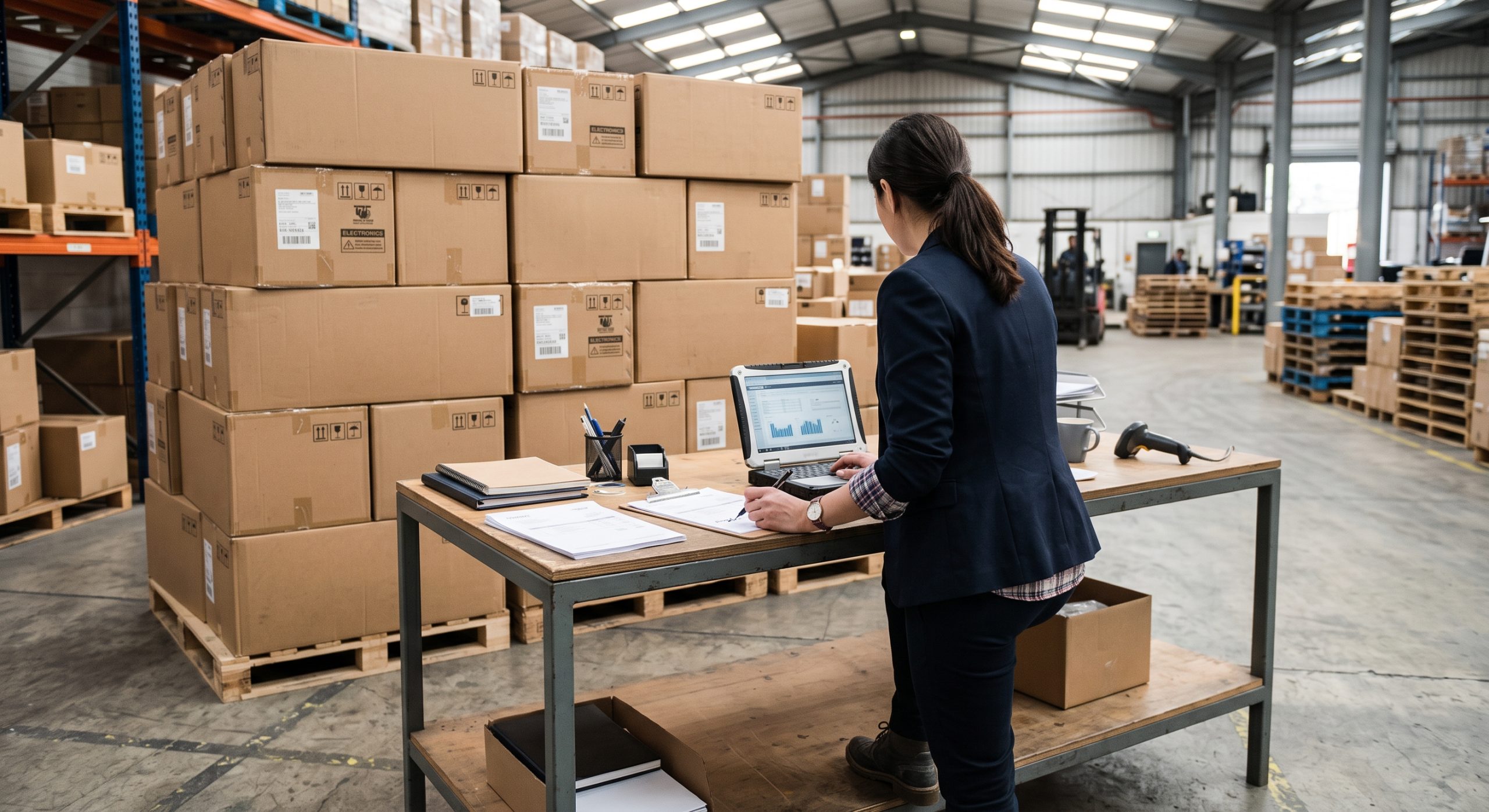
LCL (Less than Container Load) means your goods share a container with other shippers’ goods, consolidated at a Miami warehouse before the vessel departs. It is the right option when your order volume does not fill a full 20-foot or 40-foot container. It is slightly slower than FCL (Full Container Load) due to the consolidation and deconsolidation process at each end, but significantly cheaper per cubic meter.